
If you own a hot tub or are thinking about investing in one, you have probably wondered about hot tub running costs. With energy prices continuing to be a consideration for UK homeowners, more hot tub owners are looking for smarter ways to heat and maintain their spa without compromising on comfort.
One of the most exciting upgrades available is a hot tub heat pump.
At Lust Hot Tubs, we believe owning a hot tub should be about enjoying your garden all year round, not worrying about how much it costs to keep the water warm. A correctly matched heat pump can make your hot tub heating system significantly more efficient, helping you get more enjoyment from your spa while potentially reducing your ongoing energy consumption.
What Is a Hot Tub Heat Pump?
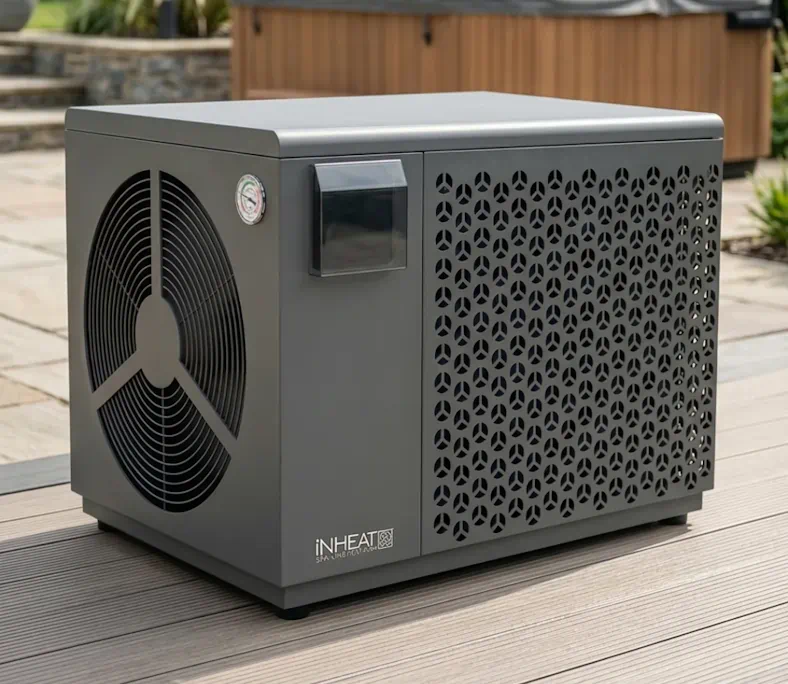
A hot tub heat pump is an energy-efficient heating system designed to transfer heat from the surrounding air into your hot tub water.
Unlike a conventional electric heater, which generates heat directly using electricity, an air source heat pump works by capturing available heat from the air and transferring it into the water.
This means a heat pump can deliver considerably more heating energy than the electrical energy it consumes under suitable operating conditions.
In simple terms, you use electricity to move heat rather than creating all of the heat from electricity.
That is why heat pumps are becoming increasingly popular with hot tub owners looking for a more efficient way to operate their spa.
Why Are Hot Tub Heat Pumps Becoming So Popular?
Hot tubs are designed to be enjoyed throughout the year, and in the UK that means heating your water during some very cold months.
A traditional hot tub heater can do an excellent job of heating your spa, but it can also consume a significant amount of electricity, particularly when maintaining temperature during colder weather.
A heat pump can provide a more efficient alternative.
For regular hot tub users, particularly those who keep their spa at temperature throughout the year, a heat pump can be an attractive long-term investment.
Potential benefits include:
- Improved heating efficiency
- Potentially lower hot tub running costs
- Reduced reliance on traditional electric heating
- More efficient temperature maintenance
- Excellent suitability for regular and year-round hot tub users
- Modern inverter technology on selected models
- Quieter operation on many modern heat pumps
- Smart Wi-Fi control on compatible systems
However, it is important to understand that a heat pump isn’t automatically the right choice for every hot tub.
The size of your spa, water volume, insulation, usage habits, location and the heat pump itself all need to be considered.
How Much Can a Hot Tub Heat Pump Save?
This is one of the most common questions we hear.
The honest answer is: there isn’t one saving figure that applies to every hot tub.
Your potential savings will depend on several factors, including:
- The size and water capacity of your hot tub
- How often you use your spa
- Your preferred water temperature
- Outdoor temperatures
- The quality of your hot tub insulation
- The condition and quality of your hot tub cover
- How efficiently your existing heating system operates
- Your electricity tariff
- The heat pump you choose
A well-insulated hot tub with a good-quality cover will retain heat far better than a poorly insulated spa, meaning the heating system has less work to do.
This is why we always recommend looking at the whole hot tub system, rather than simply buying the biggest heat pump available.
Are Hot Tub Heat Pumps Worth It?
For many hot tub owners, they can be.
A heat pump is particularly worth considering if you:
Use your hot tub regularly
The more frequently you use and maintain your spa, the greater the opportunity for an efficient heating system to make a difference to your overall energy consumption.
Use your hot tub throughout the year
If your hot tub is being enjoyed during autumn, winter and spring as well as summer, efficient heating becomes even more important.
Want to reduce long-term running costs
A heat pump is an investment rather than simply another accessory. For regular users, the potential reduction in heating costs can make the upgrade particularly attractive over the long term.
Want greater control over your heating
Many modern heat pumps feature inverter technology and smart controls, allowing the system to adjust its output rather than simply running at full power continuously.
What Is COP and Why Does It Matter?
When comparing hot tub heat pumps, you’ll often see something called COP, or Coefficient of Performance.
COP is essentially a measurement of how efficiently a heat pump converts electricity into usable heat under particular conditions.
For example, a COP of 5 means that, under the stated test conditions, the system can provide approximately 5 units of heat for every 1 unit of electrical energy consumed.
However, it’s important not to compare COP figures without looking at the conditions behind them.
Temperature, water temperature and operating conditions can all affect performance.
At Lust Hot Tubs, we recommend looking beyond a single headline number and considering the heat pump’s real-world suitability for your hot tub and how you use it.
Can You Add a Heat Pump to an Existing Hot Tub?
In many cases, yes.
However, not every hot tub is suitable for every heat pump.
Before installing a heat pump, several factors need to be considered, including:
- Hot tub plumbing
- Water flow requirements
- Existing heating system
- Hot tub water capacity
- Electrical requirements
- Available installation space
- Pipework distance
- Airflow around the heat pump
- Drainage and condensation
- Heat pump capacity
This is why professional advice is important.
Installing a heat pump isn’t simply a case of placing a unit beside your hot tub and connecting it. The system needs to be correctly sized, plumbed and installed to operate effectively.
Where Should a Hot Tub Heat Pump Be Installed?
Location is extremely important.
A heat pump needs sufficient airflow around the unit to operate efficiently. It should not be placed in a small enclosed space where the air it is exhausting can simply circulate back into the unit.
Ideally, your installation should provide:
- Good airflow
- A solid and level base
- Suitable access for servicing
- Appropriate drainage
- Correct pipework
- Suitable electrical connections
- A sensible distance from the hot tub
Planning the installation properly from the beginning can make a significant difference to performance.
Hot Tub Insulation Still Matters
One of the biggest mistakes hot tub owners can make is assuming a heat pump will solve every running-cost problem.
It won’t.
Your hot tub needs to be able to retain the heat you have already paid to produce.
That means insulation and your hot tub cover remain incredibly important.
At Lust Hot Tubs, we focus on premium hot tubs designed with long-term ownership in mind. Features such as quality insulation and a well-fitted thermal cover can help minimise heat loss, meaning your heating system doesn’t constantly have to replace lost heat.
Think of it this way:
The heat pump puts the heat in. Your insulation and cover help keep it there.
The best results come from getting both sides of the equation right.
Heat Pumps for Hot Tubs: Which Size Do I Need?
Heat pumps aren’t one-size-fits-all.
A smaller hot tub may require a completely different solution to a large family spa or swim spa.
Choosing a heat pump that’s too small can mean slower heating and recovery times, while choosing a system that’s unnecessarily large may increase the initial investment without providing a meaningful benefit for your particular setup.
When choosing a heat pump, we recommend considering:
Hot tub size: Larger water volumes generally require more heating capacity.
Usage: A spa used several times a week throughout winter has different requirements from a hot tub used occasionally during summer.
Location: Exposure to wind and low outdoor temperatures can affect heating performance.
Desired recovery time: If you want your hot tub to recover its temperature quickly after use, this needs to be considered when selecting your system.
Insulation: A highly insulated hot tub will retain heat more effectively.
Is a Heat Pump Better Than a Standard Hot Tub Heater?
Not necessarily “better” in every situation — they perform different roles.
A standard electric heater is excellent at rapidly adding heat to your hot tub.
A heat pump is designed around efficiency.
For many owners, the ideal setup is therefore about using the heat pump as the primary heating solution while taking advantage of the hot tub’s existing systems where appropriate.
Heat pumps generally heat more gradually than conventional electric heaters, so they are particularly well suited to owners who maintain their hot tub at a consistent temperature rather than repeatedly heating it from cold.
Why Choose Lust Hot Tubs?
At Lust Hot Tubs, we don’t believe in simply selling you another box for your garden.
We want you to have a hot tub that works for your lifestyle, your garden and your budget.
We’re a North East-based hot tub specialist with our showroom in North Shields, offering premium hot tubs and expert advice to customers across the UK.
Whether you’re buying your first hot tub, upgrading an existing spa or looking at ways to make your current hot tub more economical to run, our team can help you understand your options.
We can look at your existing hot tub, how you use it and your priorities before recommending whether a heat pump is actually worthwhile for you.
Ready to Make Your Hot Tub More Efficient?
A hot tub heat pump could be one of the smartest upgrades you make to your spa, particularly if you’re a regular or year-round user.
However, choosing the right system is important.
Don’t simply buy a heat pump because it has the biggest number on the specification sheet. The correct solution needs to be matched to your hot tub, water capacity, usage and installation environment.
At Lust Hot Tubs, we’re here to help you make the right choice.
Looking to reduce your hot tub running costs?
Explore our range of premium hot tubs and heating solutions or speak to the Lust Hot Tubs team today for advice on finding the right heat pump for your spa.
Frequently Asked Questions
Do hot tub heat pumps reduce running costs?
They can. Heat pumps are designed to transfer heat from the surrounding air rather than generating all heat directly through electrical resistance. Actual savings depend on the heat pump, hot tub, weather, insulation, usage and electricity tariff.
Can any hot tub have a heat pump?
No. Compatibility depends on the hot tub’s plumbing, water flow, heating system, available space and the heat pump being considered.
Are heat pumps suitable for UK winters?
Many modern hot tub heat pumps are designed to operate in cold outdoor temperatures. However, performance varies between models, so it’s important to select a system designed for the conditions in which it will be used.
Do heat pumps heat hot tubs quickly?
Generally, heat pumps are designed around efficiency rather than rapid heating from cold. They are particularly effective for owners who maintain their hot tub at temperature and use it regularly.
Is a heat pump worth it for an occasional hot tub user?
It depends. If you only use your hot tub occasionally during warmer months, the potential savings may not justify the additional investment. Regular and year-round users are more likely to benefit.
Can Lust Hot Tubs install a heat pump on my existing hot tub?
This will depend on your hot tub and its existing plumbing and heating system. We recommend speaking to our team so we can establish whether your spa is compatible before purchasing a heat pump.
What else can I do to reduce hot tub running costs?
Good insulation, a quality well-fitting cover, sensible temperature management and regular maintenance can all help reduce unnecessary heat loss and energy consumption.